Showing posts with label african airlines. Show all posts

Dropped from the Skies: African Airlines that went under in the last decade

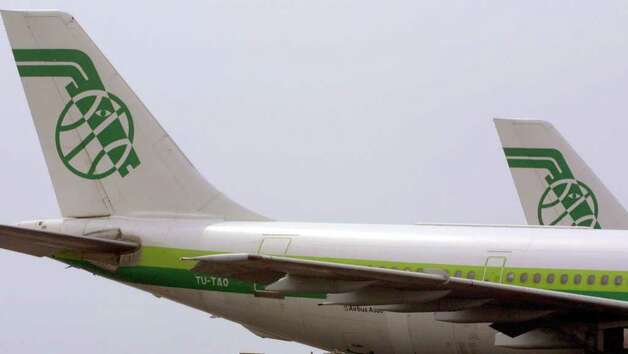
Air Afrique
In 1961, the ever united former French colonies banded together to form Air Afrique. But the airline collapsed in debt and lost all of its aircraft by the time its 11 member states decided to put the carrier to bankruptcy in 2002. Several initiatives are currently underway to form new regional airlines in the Central and Western Africa.
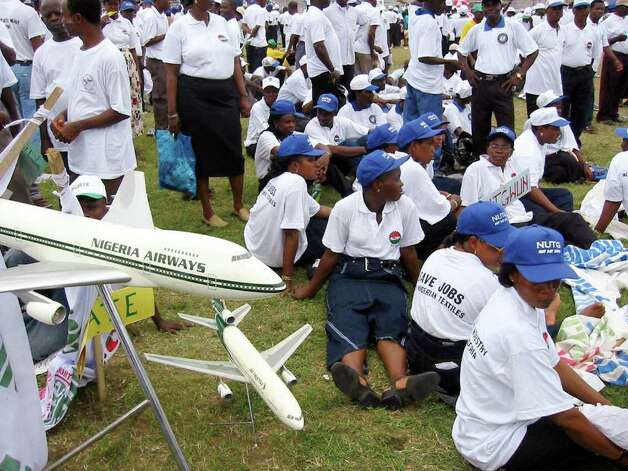
Nigeria Airways
Nigeria Airways went under in 2003 under a mountain of debts. Here, employees protest the government's plan to liquidate the airline at Lagos Onikan Stadium in 2003. Former Nigerian President Olusegun Obasanjo has described the
boards that ran Nigeria Airways as perennially corrupt.

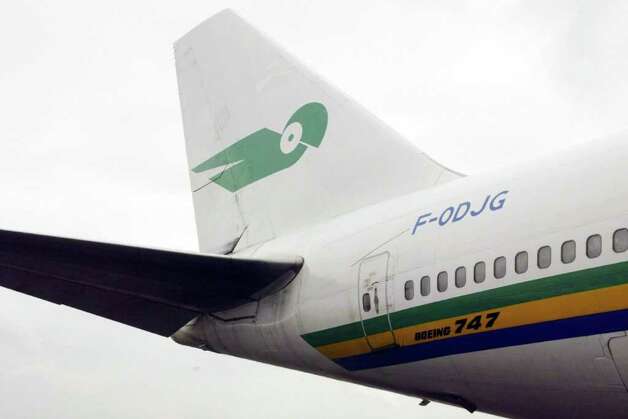
Air Gabon


Air Gabon went bankrupt in 2006
Ghana Airways
Ghana Airways collapsed under debt and safety issues in 2004. This is a Ghana Airways coffin, which may be morbidly fitting. The airline's successor Ghana International Airlines ceased operations in 2010.

Cameroon Airlines
Cameroon Airlines, Camair went under in 2008 under financial difficulties and financial issues. The successor airline Camair-Co began operations in 2011.
 Air Senegal International
Air Senegal International ceased operations in 2009 after after 38 years in the sky. The successor airline Senegal Airlines took to the skies in 2011.


Email Us at FlightAfricablog@gmail.com

Airlines Grappling with Cybersecurity Threats

Electronic data exchange is becoming a huge part of airline operations as many airlines shift transactions online to cut on costs. Many airlines are also launching online eCommerce website wheres travelers can purchase anything from frequent flyer miles to luxury items, hotel bookings, car bookings and exclusive tour offers in exotic resorts and many more.

But lurking behind these innovative business models and services is the shadow of cyberthreats and online credit card fraud.
Cybersecurity: Airlines lost $1.4 billion in 2010 to online credit card fraud
According to the 2010 Deloitte Airline Fraud Report, the scale of credit card fraud increased rapidly in the years between 2006 and 2009, driven largely by the tremendous growth in online bookings. Today's traveler is likely to book their ticket on online travel agencies like Expedia, Priceline, Orbitz, Travelstart or on airline websites' booking engines. Given that many users are purchasing tickets online for the first time or are not well attuned to the existing cyberthreats and online fraud, cybercriminals are shoving their way into the online booking business to take advantage of naive customers and lax airline online security systems.

On average, an airline loses a whopping $2.4 million per year to fraud.  Almost half of the airlines surveyed said that fraud associated with e-commerce and the Internet had increased between 2008 and 2009. Some 35% noted an increase in card fraud associated with point of sale or handheld devices, and 22% noted an increase in the number of attempts to breach IT security and firewalls.

Today's traveler and travel is never complete without sophisticated devices such smartphones, iPads, laptops, netbooks and bluetooth enabled devices which make our travel experience lot more bearable. Sadly these are also the softest targets for cybercriminals who may attack from airport lounges; attacks include identity theft, rogue Wi-Fi hotspots to new wirelessly-accessible e-passports. Some airports provide free Wi-Fi services but it's extremely difficult for a traveler to tell the difference of free Wi-Fi from a rogue free, set up to steal client information.

As more African travelers take to the skies, African banks must install extra layers of security authentication in the debit cards and credit cards beyond the information displayed on the card which is normally sufficient for a transaction.

How airlines lose money to cybercriminals
Airlines lose money to cybercriminals mainly through hacking incidents and attempts to breach its security walls.  Hacking groups and networks can compromise an airline's information security wall and in the process steal sensitive credit card information from the airline and its customers. Negative perceptions on the security of an airline's website and the subsequent loss of trust in the airline's security systems can also drive customers to book their flights with more trusted agents such as online travel agencies thus adding extra expenses to the airline and loss of business and also exposing the travelers to even greater online threats. Recently the website of the Israeli airline was disrupted by a Saudi hacking network although in this case, no sensitive financial or flight information was stolen from the airline but the airline was forced to take its website down as a result of the attack thus disrupting its online operations.

Although credit card fraud is regarded as a serious risk by most airlines, the Deloitte Report found that only about 50% of the airlines had a formal system in place to track this fraud.

The weakness is being addressed, however. The new 2011 Cybersource Airline Fraud Survey found that in 2010, airlines lost a total of $1.4 billion due to online credit card fraud perpetrated through their websites, representing 0.9% of total worldwide online ticket sales. But these figures were 31% better than the findings from the previous survey in 2008.

Airlines are doing everything they can to address the problem of credit card fraud, and to comply with the Payment Card Industry Data Security Standards (PCI-DSS), a security standard developed in 2006 by the major international payment schemes to provide protection to their cardholders. Any organization that processes, stores or transmits cardholder data is required to comply with these standards.

Low Cost Airlines at Greatest Risk of Credit Card Fraud
Further work on the issue will progress matters even more. In particular, there is a need to assist airlines that have less experience of online sales. These tend to suffer from the highest rates of fraud as a percentage of sales. Low-fare airlines have the lowest rates of fraud, probably because of their online savvy and increased awareness that every cent counts.

Credit card fraud: Countermeasures by IATA
IATA does not collect statistics on online fraud, but is active in this area. It has developed the Perseuss program, which offers a secure platform where airlines can legally share information about known fraudulent activity. The data can be matched with airline sales data, such as e-mail addresses or IP addresses, to identify suspect transactions. Perseuss is a subscription service, and more than 60 airlines are now involved to various degrees.

“Some airlines have recouped the annual cost of Perseuss in just a few months,” says Christophe Kato, IATA’s Project Manager for the Perseuss program. “We don’t offer this service to make a profit. The value is to the community of users, and what they can bring to the table through their meetings and new relationships.”
IATA has also developed its own PCI-DSS program, which secures and protects BSP sales via agencies. Whenever a credit card is used, airlines must ensure their systems are in line with PCI-DSS.

“IATA plays a significant role in trying to prevent cyber credit card crime,” says Kato. “Ensuring that PCI-DSS is correctly implemented means the risk can be passed from the airline to the merchant.”
Detecting fraud is another important area. Some airlines use automated systems to do this; others tend to do larger numbers of manual checks. “It is really a question of trying to spot anything that is suspicious,” says Kato. “It is not an exact science. Some airlines have in-house fraud analysts, while others outsource to specialist companies. Risk scores can be applied to each transaction, and those with the largest risk scores can then be given manual checks.”

The terrorist cyberthreats to airlines
Terrorists don't just blow up planes, they also perpetuate terror on the airlines through the internet. A case in point is the recent hacking of an Israeli airline website by a Saudi Group.

Greater cyberthreats with new generation of aircraft
Losing money is one thing; losing lives is something else again. Cyber terrorism poses especially serious challenges for airlines that will be taking delivery of the new generation of aircraft. In some cases, it may even require airlines to rethink the structure of their security and IT divisions.

The International Civil Aviation Organization (ICAO) has identified cyber terrorism as a distinct threat to the aviation industry that needs attention. On 17 November 2010, a new ICAO Recommended Practice related to cyber threats was adopted and became applicable on 1 July 2011. It suggests that each ICAO Contracting State should develop measures to protect information and communication technology systems used for civil aviation purposes from interference that could jeopardize the safety of civil aviation. Vulnerability assessments relating to cyber security are recommended, with the objective of evaluating the efficiency of mitigation measures and identifying vulnerabilities from a threat-based perspective.

Chamindra Lenawa of Air Astana says the airline has a resilient system with several layers of defense. “Our main servers are at our operational hub in Almaty, but we have the core operational structure replicated on an offline copy in Astana,” Lenawa notes. “As for the data itself, we also have hot‑standby systems, which replicate the data of critical systems in the form of regular snapshots so that if for any reason the data becomes corrupted, we have standby systems that can be activated quickly.”

Cyber terrorism’s increasing threat to airlines has been enhanced by globalization and the ubiquity of the Internet. An attack on an airline’s IT systems can be regarded as cyber terrorism if it brings down or paralyzes any critical system. But this can extend to the more frightening possibility that it could actually cause damage to an aircraft.

“Many future efficiency gains will be based on network connectivity and electronic data exchange,” says Ken Dunlap, IATA’s Director of Security. “The new generation of aircraft will be much more interactive in terms of automated electronic data exchange than the present generation of aircraft. These new aircraft are being discussed as ‘all-electric’ models. It is not only the primary fly-by-wire flight controls; they will have a whole range of systems operating electronically, and data will be updated automatically in real time, rather than the static updating that takes place today.”

Ensuring that this data is transferred between the ground and aircraft securely is the challenge airlines must address. It is essential that all stakeholders in the civil aviation industry work together to ensure there are no glitches.

The movies come to life
“This is a relatively new concern for airlines,” says Pascal Andrei, Director of Aircraft Security at Airbus. “Conventional security threats, such as bombs, disruptive passengers, smuggled baggage, and cargo are already being managed effectively, although these are constantly evolving. Now airlines must learn to manage cyber threats.”
Cybersecurity: With new generation aircraft and the threats of cyber terrorism, future terrorists may not need to blow themselves up to inflict terror in the aviation industry

In the film Die Hard 2, an aircraft’s systems were fooled by cyber hackers into thinking it was flying 200 feet higher than it actually was, through resetting the instrument landing system.

Andrei says this is no longer merely a fictional scenario. “It is not just a matter of ensuring that the channels of data transmission are secure, but also of ensuring that the information transmitted through those channels is correct. Aircraft have to rely on external data coming into the aircraft. If that information is not correct, it could jeopardize the safety of the flight.”

Manufacturers deliver aircraft with security features embedded, but once the aircraft has been delivered, it is the responsibility of the airline to maintain that level of security throughout the life of the aircraft.
“Airlines need to understand the threat evolution associated with new IT technologies,” says Andrei. “These new technologies can be taken hostage. Airlines need to know what they need to do to protect and maintain the level of security on the aircraft itself, which is the last line of defense.

“With more and more open systems and electronic connections between the various stakeholders in the air transport industry, the risks are increasing,” he adds. “All applications have potential bugs, and this, coupled with the interconnectivity between the aircraft and the ground, creates the challenge.”
Opening the doors

The aircraft manufacturers have already started a dialogue with airlines about these matters, but much more needs to be done to bring other stakeholders into the discussions. Airbus’s annual Aircraft Security Users Panel (ASUP) meetings have been running—strictly behind closed doors—for several years now, bringing together the heads of security at airlines with Airbus. This year, for the first time, Boeing was invited to attend the ASUP meeting, and Andrei says that next year Bombardier and Embraer will also be invited.

Boeing understands the importance of collaborative efforts and is itself part of industry groups, such as the US Department of Transportation’s Rapid Response Team. “We are working with everyone in the aviation industry to develop recommendations for common industry-wide security standards,” says Toby Bright, Boeing Commercial Airplanes Executive Vice President of Sales. “We have no competitors when it comes to safety and security, only colleagues.”

In October 2011, at the IATA AVSEC conference, a panel discussion highlighted the importance of bringing more stakeholders into these sorts of talk. “Airlines, OEMs, airport operators, and air navigation service providers all need to be fully aware of the challenge of providing accurate information within secure communication channels,” says IATA’s Dunlap.

“Five years ago, I was spending most of my time on the physical aspects of airline security,” he continues. “Now I am spending the majority of my time on technology and data exchange issues. Whether it involves airport or aircraft security, the focus now encompasses the integrity of the data stream in addition to the physical aspects of the systems.”

This new outlook is why airlines may need to rethink their security and IT divisions. The way forward will blend a diverse mix of skills.

Dunlap says that airlines must optimize their organizations to provide secure electronic communications, not only for ground‑based systems, but also for electronic data exchange between their ground systems, airport systems, air navigation systems, and their aircraft.

“Does this come under the responsibility of the IT division or the Security division?” he asks. “Airlines are already dealing with these questions today.”

The answers are vital to the future of the industry. 

Work can be republished with attribution. Email Us africadomainnames@gmail.com


Email Us at FlightAfricablog@gmail.com
AviaAssist Foundations Calls for Nomination for the African Aviator Award

The London-based AviAssist Foundation has called for nominations for the African Aviator Award, a statement said on Saturday.

The statement stated that the prestigious African Aviator Award was aimed at rewarding safety champions and promote entry of Africans in the aviation industry.

African Aviator Award to Promote Entry of Africans into the Aviation Industry
It will include a trip to the awarding event, US$500 in cash and a hand-lettered citation.
"Everyday, thousands of professionals in Africa contribute to making commercial aviation the safest form of transportation,"the statement said.

"They do so not because they expect special recognition. They think safety and act in ways that promote safety because they know the aviation industry depends on it, and because it is the right thing to do."

It said aggregate data for the entire continent masks the gains from their professionalism and the role of safety champions among them.

The statement said that AviAssist Foundation could not salute all these men and women individually, "although it pays tribute to them through its work".

"From 2012 onwards, the AviAssist Foundation will single out individuals or teams that have made especially outstanding contributions to risk reduction, often during long periods or entire careers and award the African Aviator Award," AviAssist Director Tom Kok, said.

He disclosed that each year, the AviAssist Foundation will select a particular aviation profession as the focus for the award.

For 2012, the selected profession for the award is Air Traffic Management/Control in its widest sense, with the award being offered in co-operation with the Civil Air Navigation Services Organisation (CANSO), Kok stated.

The recipient of this prestigious international award will be selected by an independent selection board from among candidates nominated by aviation professionals and organizations worldwide.
The winner of the 2012 award will be selected from the nominations.

The deadline for nominations for the African Aviator award is September 1, 2012.

The award will be presented during an award dinner and awards ceremony at the 2012 CANSO Global ATM Safety Conference in Cape Town, South Africa on 29 October-2 November, in front of an audience of industry leaders and colleagues.

The 2012 award was instituted by the AviAssist Foundation in co-operation with the Civil Air Navigation Services Organisation CANSO with sponsoring from among others CANSO, ATNS South Africa and KLM Airlines 


Read More on African Aviator Award
Email Us at FlightAfricablog@gmail.com
Why the Airlines are Bankrupt (INFOGRAPHIC)

FrugalDad.com has put up an awesome Infographic on why airlines charge high fees for their services and at the end of the year, make very large losses. Yet another reason to invest your money elsewhere, but at least in Africa, aviation is booming, so some airlines in this region will continue making marginal profits.

A throw back to the years before 1978, American aviation was highly regulated including fares, schedules and routes. The only American airline that could fly international was PanAm and airlines then had to compete purely on services. With the deregulation came in new players and competitors and many airlines soon went under or filed for bankruptcy.

Airlines are also losing cash, lots of it, through Online Travel Agencies like Priceline, Orbitz, Expedia, Opodo. American Airlines alone paid 4% of their operating expenses to OTAs or an estimated $976million in 2010. Learn more on why your favorite airline filed for bankruptcy below:

flight
Source: http://frugaldad.com

Email Us at FlightAfricablog@gmail.com
African Airlines Association Opposes European Emissions Trading System(ETS)

As predicted by former IATA chief Giovanni Bisignani, it seems Europe's stubborn, unilateral inclusion of foreign airlines into its Emissions Trading System will fail eventually or worse still, spark a trade war. The EU ETS naturally creates a trade imbalance as other countries are not imposing carbon taxes on EU airlines. AFRAA has now joined the EU and China to oppose the the EU ETS, perhaps this crisis can force governments to work harder on the ICAO process to come up with harmonized global framework that does not leave people behind. Europe's unilateral move will however draw significant push back from world powers and at the end, it's the passengers who will pay the highest price. If the airlines' lobbying will not get the EU and other governments to behave, then they will simply pass on the costs to travelers.


Under EU Emissions Trading System,  EU and foreign airlines will purchase carbon credits in the EU to offset their greenhouse emissions in the region. Initially covering power stations, combustion plants, oil refineries and iron and steel works, as well as factories making cement, glass, lime, bricks, ceramics, pulp, paper and board. Aviation was later included.
Although several key African airlines have complied with the EU Emission Trading Scheme, and at a very substantial cost, the African Airlines Association (AFRAA) has now taken up the matter once again with a public statement issued from the association’s office in Nairobi, opposing the launch of it and demanding wider consultations between the European Union and affected countries around the world.


This happened after Chinese airlines have vowed not to comply and American airlines have taken the matter to court, paving the way for a potentially crippling trade war between the EU on one side and America and Far Eastern countries on the other side of the divide, with independent analysts and observers estimating that the damage to Europe’s trading position in the world could take a serious hit.

The uncompromising stand by the EU Commission, now also hiding behind a ruling by the European Court, that they have the right to impose such unilateral schemes, had also not helped as the wisdom of the move continues to be challenged from around the world.

There is, in particular, emerging talk of "punishing" the EU as a trade block by increasing trade between the opponents of the scheme and, in particular, sidelining European attempts to get rich mineral and mining concessions in Africa by giving access to such resources to North American and Asian competitors.

Said a regular source from Nairobi a few days ago: "… so, of course, we have to comply, because otherwise we can risk huge fines or even have an aircraft detained. But we support the initiative of AFRAA and have for a while said the EU should engage in further talks and not slap the rest of the world with unilateral taxes."
At the same time, the EU’s aviation black list has also come under fire and scrutiny again, as, in particular, African airlines have been banned from the EU’s air space. Here, the same source said; "… but, of course, we are aware of safety issues in countries like Sudan or Congo, which have the worst record in Africa, if not the world. But then look at Russia, they had lots of crashes, too, and there is no blanket ban for them like we Africans are suffering. But then Russia has muscle, has influence, has oil and gas, and the EU will not dare treat them in such an openly contemptuous manner as they treat us.

"As aviators, we all agree with the need to improve safe operations, adhere to maintenance requirements and train crews in line with international ICAO standards, but we often feel the EU has a hidden agenda and no amount of denials has changed that, in fact, some of their denials read like a confirmation of our suspicions."

Additional information from eTurbo News
Email Us at FlightAfricablog@gmail.com

Aviation: Africa Air Traffic Development Trends

Below we review some of the key data that high-light the development of the continent‟s commercial aviation sector.The analysis is published based on information from the African Airlines Association, November 2011  Newsletter.

Intra-African traffic
African airlines account for 90% of intra-African ASKs (Available Seat Kilometres). Capacity growth here is less than half of its pre-recession level. Due to the slowdown at home, it is important that the continent‟s airlines also look increasingly outside of Africa for growth opportunities.
Figure: Intra-African Capacity: Growth figures are CAGRs over the periods; years are 12 months ending in September
Source: Innovata, Seabury analysis 
 

Share of Capacity Growth from Q4 2004 to Q3 2011
 
Traffic between Africa and the rest of the world
The capacity growth picture for Africa to the rest of the world looks similar to that inside of Africa, with only a fraction of the pre-recession growth rate.

Notably, since 2005 African airlines have been responsible for only one quarter of Africa‟s intercontinental ASK growth, meaning non-African carriers have added nearly three times as much capacity as African ones
Capacity, Africa to other regions by carrier home base:Years are 12 months ending in Q3 of each year; Africa includes N. Africa
Source: Innovata, Seabury analysis

Among the top 20 carriers in terms of added intercontinental capacity since 2005, only five are based in Africa. Arabian full-service carriers, European low-cost carriers/charter operators, and FSCs from Europe and the United States have all aggressively added capacity.

Interestingly, 2of the top 5 (and 5 of the top 20) in added capacity had none at all until 2006. The African intercontinental market is highly vulnerable to foreign incursion, because the traffic base for intercontinental flows largely originates outside of Africa, putting foreign carriers at a marketing and sales advantage.

Getting a larger slice of the cake
Numerous major African FSCs have recently announced ambitious fleet expansion and renewal programs, and  the particular emphasis on wide-bodies foretells their continued push beyond the region. The emergence of new technologies expressed in the longer reach of mid-size wide-bodies will allow them to serve thinner routes.

Added Intercontinental Capacity from Africa in 2011 Vs 2005(Open in new tab for full view)


As African airlines extend into new markets overseas, their disproportionate dependence on customers on the non-African end of their routes will create tremendous sales, marketing and distribution opportunities as they partner with other airlines and modernize sales techniques. Knowledge of the target markets will be a key to their success.

Courtesy: The African Airlines Association(AFRAA)
Email Us at FlightAfricablog@gmail.com

African Airlines Association to hold 44th AGA in Mali

The African Airlines Association announced at the recently concluded Annual General Assembly in Marrakech Morocco that it will hold its 44th annual general assembly in Bamako Mali from 18-20 November, 2012.

The host airline of the 44th AGA will be Air Mali, whose Chief Executive
Officer, Mr. Abderahmane Berthe, was elected the new President of AFRAA at the just concluded 43rd AGA in Marrakech, Morocco


Email Us at FlightAfricablog@gmail.com

Airlines to profit from Africa’s growth opportunities

Africa has been asked to review the "complex" structure of its taxes and fees imposed by service providers to enable airlines in the continent exploit the existing growth potential.

It is believed that the duties in Africa are relatively higher in comparison to other regions and particularly when seen in light of the level of infrastructure and services available.

For instance, it is estimated that it costs 18.5 US cents per Revenue Passenger Kilometres (RPK) to travel in Africa as compared to 15.5 US cents in Asia, 12.3 cents in Europe and 11.0 cents in North America.

RPK is a measure of passenger’s sales volume, which can be obtained by multiplying the number of revenue passengers carried on a flight by the distance traveled by each passenger.

Industry leaders who concluded their 43rd Annual General Assembly and conference in Southern Morocco last week heard that the "excessive" charges imposed on the airlines operating in the continent and their passengers, with experts saying this has impeded airlines from realising their full potential.

The Airlines Association (Afraa), Secretary General of African Elijah Chingosho noted that cost of travel from Africa is still very high compared to other regions of the world.

He said high intra-Africa and intercontinental airfares are mainly attributed to high airport taxes and fees coupled with high fuel, insurance, aircraft financing and leasing charges experienced in the region.

"This is stifling development of air transport and compounding the many difficulties that African airlines have to surmount to be competitive and profitable," he said.

He said that the impact of high charges should be examined in light of Africa’s huge potential for growth of air transport, which by all indications is becoming one of the fastest growing regions in terms of air traffic.

New partnerships

Opening the three-day General Assembly on behalf of the Minister of Transport of the Kingdom of Morocco, the Director General of the Civil Aviation Authority of the Kingdom of Morocco, Abdennebi Manar, challenged African airlines to open up their markets and brace themselves for competition.

He called upon industry stakeholders in Africa to work together and seek partnerships with each other to broaden their network as well so as to mop up traffic to compete with operators from other regions.

During the meeting the Chief Executive Officer of Air Mali Mr Abderahmane Berthe was elected President of Association and host of the 2012 AFRAA Annual General Assembly.

Welcoming delegates to the meeting, the President of AFRAA and Chairman of Royal Air Maroc, Driss Benhima, noted that air transport liberalisation is good for the continent but cautioned it can pose serious survival challenges to local airlines ill-prepared to compete in a liberalised market. He said Morocco last year attained its target of 10 million tourist arrivals due largely to the open skies agreement with the EU.

Post Courtesy

African Airlines and Social Media Revisited

The last time I wrote about African Airlines and social media was in 2009 when social media was still an alien tool to many African airlines and passengers alike; only Kenya Airways had an active social media campaign in 2009 with an active Twitter account, Facebook page, Youtube channel, Flicker account and a dedicated social media development team.

Kenya Airways has therefore reaped the benefits of joining the race early and the airline has the largest social media following across various social media platforms. The channels, especially the Twitter feed is fresh, helpful and engaging. The Kenya Airways Corporate Communications Manager is also on Twitter, so users are only a Tweet away from engaging the airline in a more meaningful way.

Another dynamic that has changed in the last few years in Africa is access. More Africans have had greater access to broadband and hence millions more have signed up on social media channels and are running blogs. Many African travelers have utilized this new “voice” in loudly expressing their satisfaction/displeasure at airline services. A case in point might the incident when Ugandan Opposition leader Kizza Besigye was taken off a KQ flight destined for Entebbe after the airline received a warning from Ugandan aviation authorities that the flight might be prevented from landing at Entebbe with the opposition leader onboard. Many Ugandan sympathizers descended on KQ Facebook page to express their displeasure and even declared their intention to “boycott” Kenya Airways flights. Today, unlike two years ago, a simple Twitter search for any major African carrier will yield lots of conversation, presenting a golden opportunity for airline social media managers to jump in and manage the conversation. Increased internet access has empowered consumers and given many a direct way to get in touch with the top management on issues of concern.

Sheer numbers aside, there have been some quality too in the deployment of social  media marketing tools  through innovative techniques as can be seen amongst South African airlines like Kulula. Some of the top African airlines on Twitter include the following:

Kenya Airways                     14,495 Followers
South African Airways            8299 Followers
Kulula                                     6012 Followers
Arik Air                                  3084 Followers
Air Nigeria                                712 Followers

Kulula engages its clients in more conversation and has the highest number of mentions on Twitter, meaning Kulula is getting social media right. In the next post, I will analyse these stats in detail using some three social media tracking tools to determine which airlines generate more negative vibe and which are more influential.                          
Email Us at FlightAfricablog@gmail.com

SkyTrax: The Best Airports in Africa

The SkyTrax Award , which lists the best airports on the world is based on a questionnaire filled in by 11 million passengers. Hong Kong International Airport was voted the best airport in the world, followed by Singapore Changi Airport and Incheon International Airport. It's important to note that the best three airports are in the Far East Asia.
 The Top accolades in Africa not surprisingly went to South Africa. The best airports in Africa in 2011 are located in South Africa, not surprising given the development and upgrade in its aviation infrastructure that the country underwent in hosting the 2010 World Cup and some solid past investments in its aviation infrastructure. It's therefore not a surprise that South Africa has the most competitive domestic aviation market in Africa.

Here are the best Airports in Africa:
1. OR Tambo International Airport, Johannesburg: OR Tambo International Airport (ORTIA) in Johannesburg is the air transport hub of Southern Africa, catering for more than 17 million passengers each year. With more than 18,000 people employed by various companies at ORTIA, the airport plays a vital role in the city's and Gauteng province's economy, and boasts an impressive infrastructure that has expanded by thousands of square metres from its modest origins.

2. Cape Town International Airport, Cape Town: Cape Town International Airport is Africa’s 3rd largest airport, located approximately 20 kms from the city centre. It is also Africa’s premier tourist and VIP destination and has established a reputation as Africa’s premier international award-winning airport, consistently performing among the best in the world for service in its category.

3. King Shaka International Airport Durban: King Shaka International Airport, also known as La Mercy Airport is the primary airport serving Durban, South Africa. Located at La Mercy, approximately 35 kilometres (22 mi) north of the city centre of Durban, it opened its doors to passengers on May 1, 2010. The airport is named after Shaka, leader of the Zulu nation in the early 19th century.

African Aviation: Africa Needs to Improve on Aviatioon Data Gathering

The Nigerian Civil Aviation Authority (NCAA) is decrying poor aviation data on its aviation sector but this is not just a Nigerian problem but a problem facing the African aviation sector as a whole. The authority says that the data showing annual passenger traffic emanating from the agencies in the country are mostly contradicting and unreliable.

 The Director General for NCAA Dr Harold Demuren has stated that aviation statistical committee gathering was to appraise the statistics of aviation agencies and parastatals which handle data collection and use them to reliably enhance the role of statistics in the formulation of policy as well as planning. 

Accroding to Demuren, the Nigerian aviation industry has changed significantly in the past 10 years and liberalisation has taken place in almost every aspect of the industry leading to rapid development. The Nigerian government-owned airline has been replaced by privately owned ones; Nigeria has inadequate and ageing infrastructure resulting from lack of funding and lack of continuity in policy which have plagued airports, air navigation services and handling agencies but these are now being addressed.

The director has lamented that despite the importance of statistical data in the sector, the data given by agencies in the Nigerian aviation industry are contradictory.

In  2010 for example, figures gathered by Nigerian Civil Aviation Authority, which recorded data for total arriving and departing domestic passengers from the 21 airports  was 5,648,931 and 5,632,406 respectively, while  international arriving passengers  was 1,661,072 and 1,587,879 for international departures respectively,  totalling 14,530,288 passengers on flights departing and arriving Nigeria.
But the figures according to FAAN on the other hand, recorded 2,147,937 international embarking passengers and 5,344,346 embarking domestic passengers while disembarking passengers stood at 1,648,479 passengers for the international sector and 5,392,374 for domestic, giving an overall total of 13,983,136 passengers for 2010.  A difference of almost 600,000 passngers, who were unaccounted for by FAAN. The disparity is not acceptable to both industry stakeholders and the travelling public as it raises credibility and accuracy questions in the data gathered by FAAN.

Also, even  though aviation safety has improved significantly in the country, Nigerian aviation sector has nevertheless continued to be in a critical state requiring huge investments and which African countries find difficult to meet.

According to the International Air Transport Association (IATA), Africa recorded an accident rate of 7.41 accidents for every million flights in 2010. While this was an improvement over the 9.94 accidents per million flights recorded in 2009; this record remains the worst among the world’s regions. In spite of that, data provision even in the case of accidents in Africa is still unreliable. It's common for many international research institutes and aviation analysts to avoid using data from Africa since the data is unreliable and inconsistent. Many studies on the growth of global aviation do not even factor in Africa, in spite of the gains made in the region's skies in the recent past.

Data given by many African civil aviation authorities is not consistent and accurate, and in some cases, the data is even manipulated. It's importaht for Africa's and Nigeria's authorities to improve data gathering and generate accuarate, harmonized, reliable data that can be used not only in planning but by the global aviation fraternity.

Air Namibia to be bailed out for the "last time"

The Namibian government has increased the bailout amount for the nation's national carrier Air Namibia with a promise that this will be the last time it will be coming to the aid of the struggling carrier.

The billion-dollar package was worked on a turnaround plan that was approved by the Namibian cabinet. the new business plan, developed by IATA Consulting, will see Air Namibia produce a well develop network that results in a better product attractive to higher yielding customers and to potential airline partners.

New routes yet to be developed, better scheduling and newer aircrafts are expected to boost the productivity of the airline. The plan will see the creation of a hub at Hosea Kutako Airport in Namibia, from where Air Namibia will fly from and to other destinations in the Southern Africa region. 

Zimbawe to build Longest Runway in Africa to woe back airlines

Zimbabwe’s Harare International Airport will have the longest runaway in Africa following a major facelift aimed at luring back major airlines back into the country according to Zimbabwean officials. Zimbabwe's economic freefall that brought the country to its knees also drove airlines away from the country as the route became uneconomical due to a dip in tourist arrivals and trade.

The economy has been rebounding following a power-sharing agreement signed with the opposition and one of the sectors the administration has been keen onrevining is the the critical travel and tourism and industry.

The Civil Aviation Authority of Zimbabwe (CAAZ) will spend US$5 million in the project that will be completed in December this year.

On completion the runway will be five kilometers long with a 30 year lifespan and is designed to accommodate the world’s largest airbus plane. “It will be among the world’s longest runway and the biggest in Africa,” Jerry Ndlovu, the airport director said.

South Africa’s biggest and busiest airport, OR International Airport in Johannesburg has a 4.4 km runway.
A total of 18 international airlines stopped flying into the country after the economic decline set in almost a decade ago. They include Lufthansa, Qantas, Austrian Airlines, Swissair, Air India, Air France and TAP Air Portugal, Egypt Air, Air Mauritius, Linhas Aereas de Mocambique, Air Namibia, Royal Swazi Airlines and Air Seychelles, Air Tanzania, Ghana Airways, Air Uganda and Air Cameroon.

The few airlines that remained faithful in Zimbabwe's hard times were Ethiopian Airlines, South African Airways, Kenya Airways amongst others.
Air France, Austrian Airlines, Egypt Air, Swiss Air, Bulgarian Airlines, Qantas, Emirates, KLM and Lufthansa have indicated that they are now ready to fly back into Zimbabwe.

Selling Air Zimbabwe would be a challenge given its financial state: Minister

Air Zimbabwe is in such shambles and its financial position so hopeless it would be difficult to find takers even if the government decided to offload it, a Zimbabwean cabinet minister has said.

State Enterprises and Parastatals minister Gorden Moyo on Wednesday told the Parliamentary Portfolio Committee on State Enterprises and Parastatal Management that finding an investor to buy the ailing airline was likely to prove a mammoth task.

Moyo was responding to a question by Chiredzi North MP, Ronald Ndava, a member of the Portfolio Committee chaired by Zvishavane-Runde MP, Lawrence Mavima, who had asked him to explain why his ministry was not disposing of loss-making parastatals that were draining the fiscus.

“There are certain entities where we think surely, government should be out of,” Moyo said.

“But it may not be easy to sell Air Zimbabwe right now even if you want to offload it because you may not find a taker because of its state,” he said.

Moyo however said the difficulties facing Air Zimbabwe were not unique to Zimbabwe as a lot other airlines around the globe were performing very poorly. He cited Zambia Airways as an example.

“It is not just Air Zimbabwe which is suffering — very few airlines are doing business and it might be a big problem to sell Air Zimbabwe. A lot of parastatals are faced with huge debts and this on its own makes our parastatals unattractive to suitors. To get investors investing in a shell is not easy because of this debt overhang,” Moyo said. Moyo indicated most of the equipment in the country’s parastatals was dilapidated and archaic. To get investors to inject funds into businesses that were going under was not easy.

“The fiscal space is also too constricted to inject capital or even expertise into these entities especially given the serious human capital flight Zimbabwe has suffered,” he said.

State Enterprises and Parastatal Management deputy minister Walter Chidakwa said the issue of marketability to suitors by ailing parastatals was affected by tariffs.


“The investor looks at prices in Zimbabwe and compares them with those in the world. He looks at whether he will be able to recover his investments and we end up in this dilemma,” said Chidakwa.